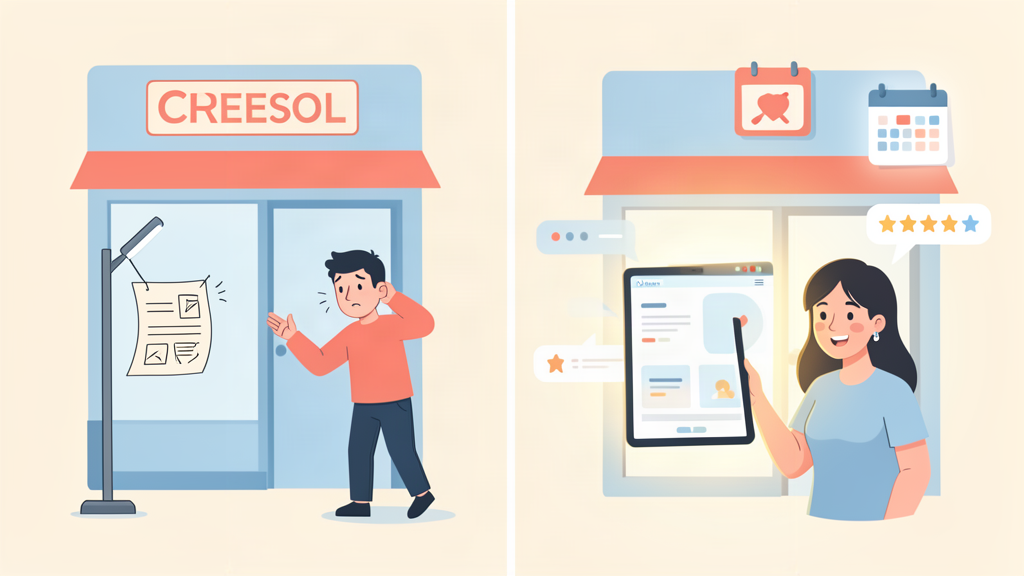
Most business websites don’t do anything. They sit there with a logo, an “About Us” page, and a contact form that maybe gets filled out twice a month. They’re billboards, basically. You paid a few thousand dollars for a sign on the digital highway.
The site I want to talk about is the other kind. The one that earns its rent.
The job a sales rep does
A good sales rep does four things on the phone with a prospect. They figure out what the prospect needs. They explain how the offer solves it. They answer the questions that come up. They book the next step or close the deal.
Most websites do none of these. They show up. They wave. They go home.
A working site does all four. It asks a few questions to qualify the visitor. It walks them to the offer that fits. It answers the common objections in plain language on the page. And it puts a calendar link or a phone number right at the moment the visitor is ready to act.
What “captures leads” actually means
There’s a difference between a contact form and a lead capture. A contact form sends you a message and waits. A lead capture finds out what the visitor is trying to do, sends them a tailored response, and tags the conversation in your inbox so you know who to call back first.
The plumbing matters. A form that says “Tell us about your project” gets ignored. A form that says “Pick the service you need and your timeline” gets filled out. The first is a suggestion box. The second is a salesperson with a clipboard.
The same logic applies to every other element on the page. A button that says “Learn more” doesn’t get clicked. A button that says “Get a quote” gets clicked. A button that says “Book a 15-minute call” gets clicked most of all. The visitor doesn’t need more information. They need a next step.
What “follows up” actually means
The follow-up is where most small businesses lose the deal. Someone fills out a form at 10 p.m. The owner reads it the next morning. The owner calls at 2 p.m. The prospect has already talked to someone else.
A working site sends the confirmation email within a minute. It sends a second email two days later with an answer to a question the visitor is likely asking. It flags the lead as cold if no one responds in a week. None of this requires a human being in the loop on day one. It’s all set up once and runs on its own.
The best working sites do something else: they route leads by what the visitor asked about. A question about pricing goes to the salesperson. A question about hours goes to the front desk. A question about a specific service goes to the person who does that work. This is the kind of thing that takes an afternoon to wire up and saves years of misdirected email.
What this looks like in practice
A landscaper’s site with a “Get a quote in 60 seconds” widget that asks for the lot size, the service needed, and the address. The form drops into the owner’s inbox with the address already mapped. The owner calls with a ballpark before the lead goes cold.
A dentist’s site that lets new patients book the first cleaning online, sends a confirmation, a reminder two days before, and a follow-up text after the visit asking for a review. The front desk spends less time on the phone and more time with the patients in the chair.
An accountant’s site that lets a small business owner upload last year’s return and get a price quote within an hour. The accountant gets a clean lead with the documents already attached. The owner gets an answer without playing phone tag.
None of this is exotic. Most of it is free or cheap to set up if you know what you’re doing. The expensive version is the same setup built by an agency for $15,000. The cheap version is the same setup built by an owner with a Saturday and a list.
How to tell which kind of site you have
Open your analytics. Look at how many people filled out your contact form last month. Look at how many of those became customers. If the first number is small, your site is a billboard. If the second number is also small, your form is the problem.
Ask five customers how they found you. If the answer is “Google” and they can describe what they saw on your site, the site is doing its job. If they say “the Google listing” or “I called the number on the map,” your site is just decoration.
The cost of a billboard
If your site is more than a year old and isn’t doing these jobs, it might be worth a conversation with someone like Gorden Web Design. The site you have isn’t broken. It just isn’t built for the work you actually need it to do. That’s a fix, not a rebuild. Most of the time the bones are fine and the wiring needs updating.