If your customers find you by typing your business name into Google Maps, your website is secondary. If they find you by typing “plumber near me” or “dentist in Wenatchee,” your Google Business Profile is doing the work and your website is just what they tap to confirm you’re real.
Most small businesses have the priorities backwards. They spend $5,000 on a website they update once a year, and their Google listing has the wrong hours and three reviews from 2019.
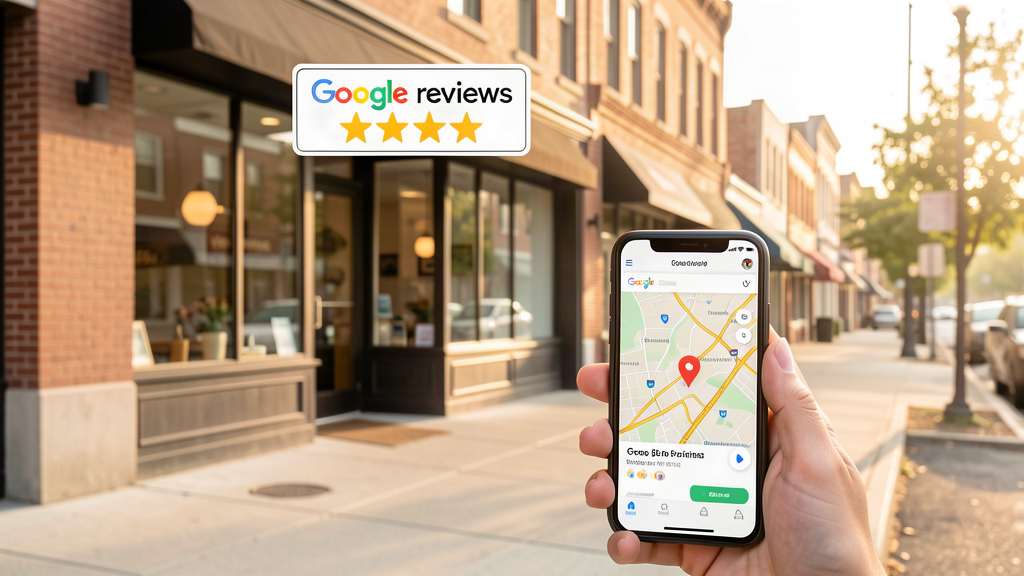
What a Google Business Profile actually is
It’s the box on the right side of a Google search that shows your address, hours, phone number, photos, and reviews. It’s also the pin on Google Maps. It’s the thing Google shows first when someone searches for your category in your town. If you have a physical location or you serve customers in a specific area, this is the listing that drives most of your local calls.
You set it up at business.google.com. You verify your address by postcard or phone. It’s free. Most businesses have one, but most haven’t touched it since the day they claimed it.
Why it matters more than the website
Three reasons.
First, it’s where Google puts local businesses in search results. The map pack (the three listings with the map) shows up above the regular results for almost any local query. If you’re not in that pack, you’re competing against businesses that are.
Second, it’s what shows up when someone is walking around with their phone open and looking for the closest option. A person driving down the street searching for coffee does not open a laptop and browse websites. They tap the map pin.
Third, it’s the place reviews live. Reviews are the strongest signal Google uses to rank local businesses. A profile with 80 reviews and a 4.7 star average will outrank a profile with 4 reviews and a 4.7 average, even if the second business has a better website.
What the profile needs to actually work
Correct hours, including holiday hours. A category that matches what you actually do (not “consultant” if you run a plumbing shop). A description written like a person would write it, with the words your customers actually search for. Photos of the storefront, the team, the work, taken in the last year. A link to your booking page or your real phone number.
The most important thing: a steady stream of recent reviews. Ask every happy customer for one. Send a text with a direct link to your review page. Don’t incentivize it, just make it easy.
The thing most owners miss is the Q&A section. Anyone can post a question on your profile, and Google shows the answers in search results. Check yours weekly. Answer the questions. If a question is wrong or unfair, add the right answer as the business owner.
Posts you didn’t know you could make
Your Google Business Profile has a posting feature that almost no one uses. You can write a short update (offers, events, what’s new this season), add a photo, and it shows up under your listing for seven days before falling off.
You don’t need to post every day. Once a week is enough to signal to Google that the profile is active. “We have fresh sweet corn this weekend” or “Book your fall cleanup before October 15” are the kinds of posts that move the needle.
Photos that actually help
The photos on your profile should look like a real business, not a stock photo site. Phone photos are fine, as long as they are recent and well-lit. The cover photo should show your storefront with signage visible. Add a few of the team, the inside of the space, and the actual work you do.
Skip the generic “office” stock photos. They make your profile look like every other business in the category. The point of the photos is to make a searcher recognize your place when they drive by.
Common mistakes
The biggest mistake is ignoring the profile for a year and then panicking when the calls drop off. The second biggest is letting old hours sit there through a holiday weekend. The third is replying to negative reviews defensively instead of calmly.
A bad review is a chance to show future customers how you handle problems. A short, useful reply that acknowledges the issue and offers to make it right is worth more than five positive reviews. A defensive reply is worth less than no reply at all.
What your website is actually for
The website is what people see when they want to confirm you’re legitimate. It should load fast on a phone. It should show what you do, where you do it, and how to reach you. It does not need to be a 30-page brochure.
A one-page site with a clear offer, your hours, your service area, and a way to book or call beats a beautiful five-page site that loads in eight seconds. Speed and clarity beat design awards.
What to do this week
Open your Google Business Profile on your phone. Check the hours. Check the photos. Read the description. Count the reviews from the last six months.
If anything is wrong, fix it. If the photos are old, take new ones with your phone and upload them. If you don’t have a category that fits, change it. If you have fewer than 10 reviews, make it a goal to add two this month by asking in person.
Local SEO is something Gorden Web Design does for clients in the Wenatchee area. If your profile is a mess and you’d rather hand it off, that’s a fair thing to outsource. But the basics are something any business owner can do in an afternoon.